Our Products for Sale


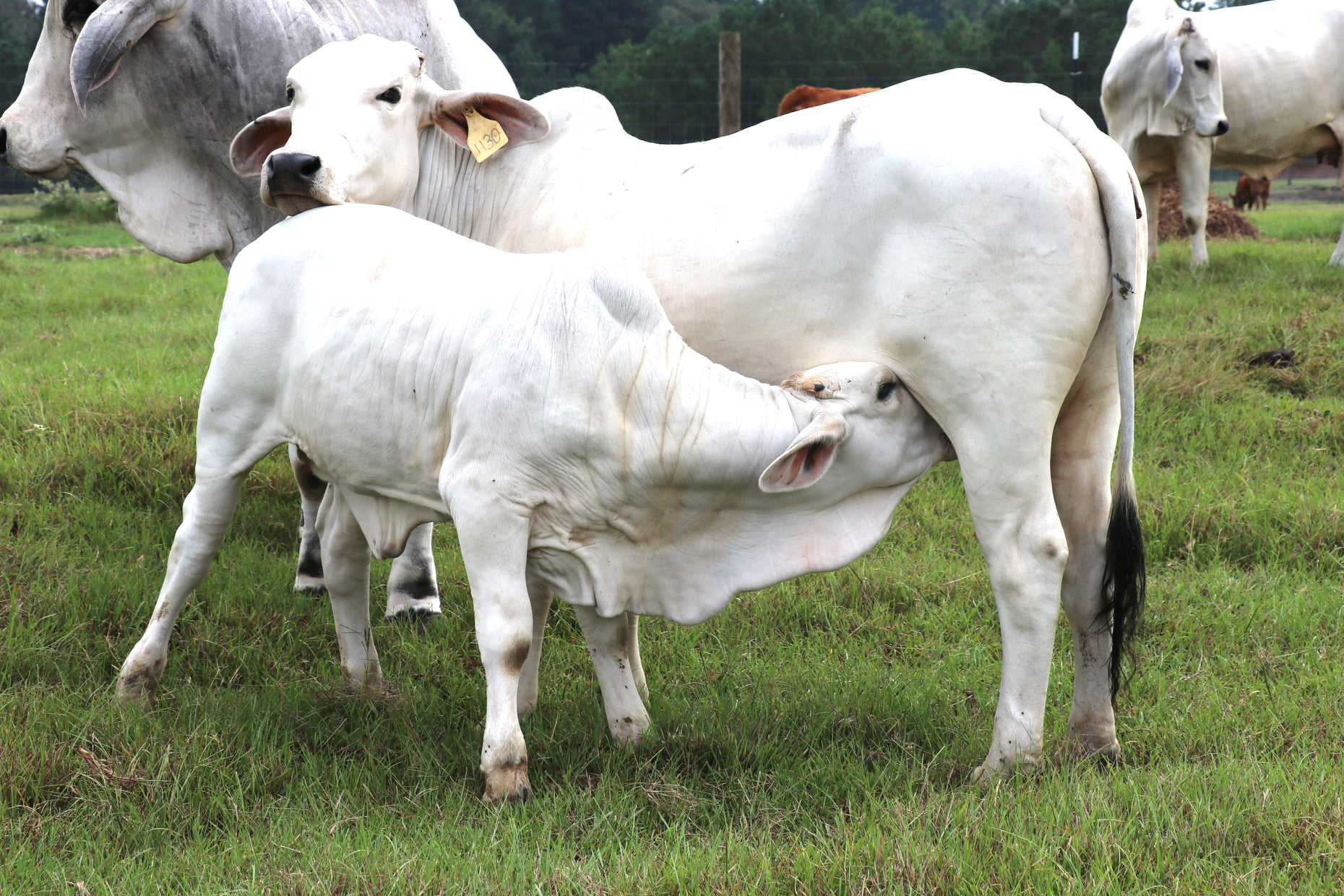
BUY BRAHMAN COWS | CALVES | BULLS |HEIFERS
Cattle breeds: Brahman
Origin
The Brahman breed originated in the USA in the early 1800s where it was developed from the progeny of four Indian Zebu breeds. Some infusion of local British breed (Bos taurus) cattle also occurred during its development.
Early Brahman importations into Australia can be traced as far back as the turn of the century. However, it was not until 1933 that significant numbers were imported by a syndicate of Queensland cattlemen. Further importations from the USA were made from 1950 to 1954.
Distribution
The Brahman has developed as a major beef breed in the tropical humid and subtropical dry areas, particularly in Queensland, north-eastern Western Australia, the Northern Territory and the north coast of New South Wales.
Breed characteristics
Brahmans are characterised by a hump above the shoulders and a pronounced dewlap. The coat is short and can be light to dark grey, various shades of red, or black. They show typical Bos indicus characteristics of shielded eyes, loose folds of skin on the dewlap and prepuce, and droopy ears. Brahmans are intelligent, inquisitive and shy. The breed is medium in size with a tendency to later maturity, so carcases of young animals tend to be lean.
Why Brahman??
Looking to add a boost to your commercial herd or expand into raising high-quality American Brahman cattle? Here are reasons to consider this unique breed.
Hybrid Vigor
American Brahman’s ability to generate maximum hybrid vigor (heterosis) when crossed with other breeds is unmatched in today’s beef industry.
The result is the best of both worlds: enhanced performance and profit potential.
Mating Brahman bulls with European or English breed cows is one of the most popular crossbreeding practices in the U.S. The resulting Brahman F-1 calf is in high demand by cattlemen for replacement females or feeders in the feedlot.
Years of crossbreeding research have consistently shown that ranchers get higher levels of heterosis when crossing a Brahman with a British or Continental breed, compared to breeding British or Continental breeds to each other.
Because of this, American Brahman cattle are often referred to as, “Crossbreeding’s Common Denominator.”
Environmental Adaptability
Perhaps the Brahman breed’s greatest trademark is its ability to adapt and thrive in any given environment.
Structurally, Brahmans have dark skin pigmentation that filters the sun’s intense rays and keeps the breed free of cancer eye. Brahmans are also known for their ability to use and maximize lower-quality feed, travel longer distances for feed and water, and resist insects and external parasites — all while withstanding vast climactic differences.
Brahman females have proven that environment does not limit their ability to reproduce. Even in stressful conditions, Brahmans adapt and make the best of what’s available.
Because of these benefits, it’s easy to see why American Brahmans are highly sought after for crossbreeding. They complement in areas where no other breed can compete.
Heat Tolerance
The Brahman’s skin is genetically equipped to withstand temperature extremes, which makes them more heat tolerant than any other breed.
How? The Brahman’s short, thick, glossy hair coat reflects much of the sun’s rays, allowing them to graze in midday sun. Also an abundance of loose skin, characteristic of the breed, increases the body surface area exposed to cooling. Another special feature is the Brahman’s ability to sweat freely, which contributes greatly to their heat tolerance.
What about in cooler climates? Brahmans grow a protective covering of long, coarse hair beneath which a dense, downy, fur-like undercoat can be found. In colder weather skin is contracted, increasing the hide thickness and hair density, which aids in retaining body heat.
Gain Efficiency & Carcass Quality
The Brahman breed performs well beyond the pasture and into the feedlot.
Hybrid calves and those out of Brahman F-1 cows are known for fast gains. Research has shown Brahman-influenced calves have the potential to consistently produce more weight per day of age than most other breed contemporaries.
Brahman-cross calves are also more desirable to feed in many parts of the country during hot and humid months, when the feed efficiency of European and British calves and crosses decreases. Their ability to finish strong is a definite economic advantage.
While efficiency is an important quality of the Brahman and its crosses, carcasses are also known for their high cutability, which results in a high-yielding carcass with limited fat.
Maternal Ability & Fertility
American Brahman females are highly recognized for their superior maternal ability, longevity and fertility — consistently producing calves, year after year.
Many commercial producers turn to the Brahman F-1 female, known as the “Queens of Cow Country,” because of their bred-in environmental adaptability, increased milk production and long productive life. They breed back quickly and transmit those fertility traits to their offspring.
She’s also thrifty and efficient. Generation after generation, the Brahman female has proven her ability to wean fast-growing calves using fewer inputs.
Brahman’s versatile nature and genetic advantages for heat tolerance, disease and pest resistance, and adaptability make a beneficial addition to cow herds around the world.
Related Products
-

OX/COW/CATTLE GALLSTONES
Read more -

BUY SUFFOLK SHEEP | LAMBS | EWES | RAMS
Read more -

BUY AWASSI SHEEP | LAMBS | EWES | RAMS
Read more -
BUY CALVES
Read more -

BUY BROWN SWISS COWS | BRAUNVIEH CATTLE
Read more -

BUY LIMOUSIN HEIFERS | CALVES | BULLS
Read more -
BUY HEREFORD COWS | CALVES | BULLS
Read more -

DAIRY GOAT SUPPLIER | EXPORTER
Read more -

BUY PUREBRED BOER GOATS
Read more